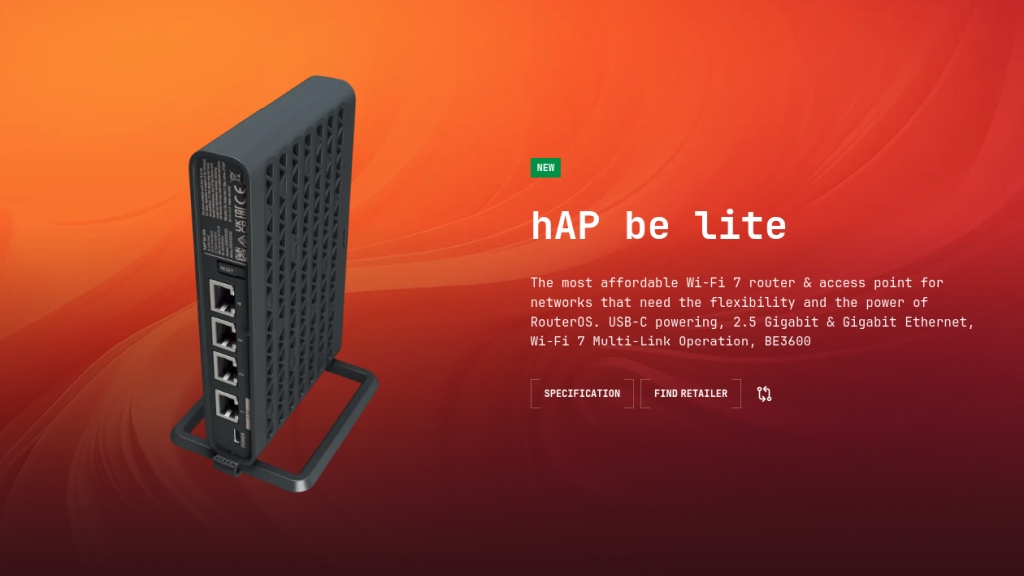
In the previous post, I introduced the MikroTik hAP be lite, a home router and wireless access point. Today, let’s talk about one of its many features: Safe Mode.
While configuring the MikroTik, you may change some setting that makes it inaccessible. This usually happens by accident, but once you lose access, there’s no way to undo the last change. For example, you’re editing the firewall settings and add a new rule that ends up blocking your own access to the router.
Read more ›
Between 2016 and 2017, I worked as a network analyst and was introduced to equipment made by MikroTik, a manufacturer of networking devices such as switches, routers, antennas, etc. MikroTik is probably best known for its RouterBOARD line of routers. But I got excited when I found out they also had a home line, and I soon bought a MikroTik router for myself.
From time to time I upgrade my home router, and I did that recently, so I decided to take the opportunity to set it up from scratch and write some tutorials showing its features.
Read more ›
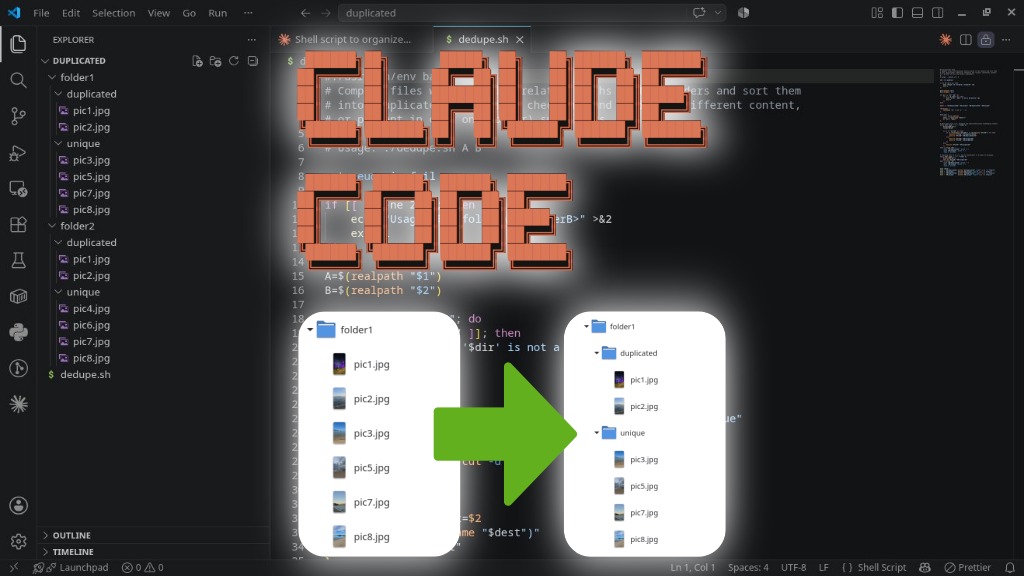
I’ve been experimenting with artificial intelligence and recently started tinkering with Claude Code. For those just starting out, like me, I recommend the Claude How To guide, a GitHub repo with several examples of how to get the most out of Claude Code.
Claude Code is an agentic coding tool by Anthropic that runs directly in the terminal, but is also available as extensions for various IDEs (including an extension for VS Code), as well as a desktop and web app (accessible from the browser). Claude Code reads and understands the entire codebase to perform tasks autonomously, such as implementing new features, fixing bugs, refactoring, explaining complex code snippets, editing files, running commands, and even handling Git workflows. All of this can be requested by the user with natural language commands. This way, Claude Code works as a development assistant that acts directly on the project instead of just suggesting code.
Read more ›
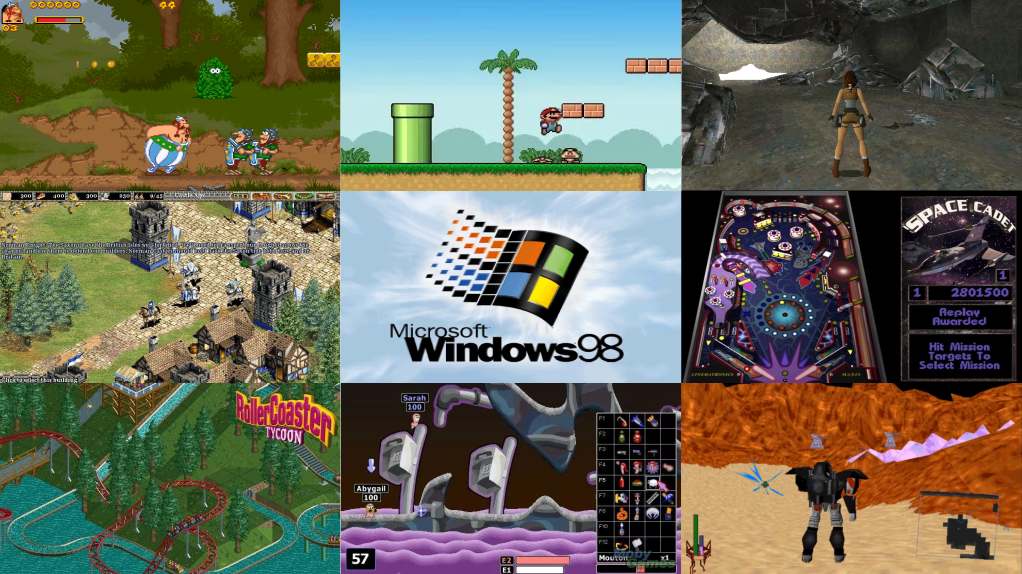
Microsoft released Windows 98 on June 25, 1998. It’s been 28 years now! If you used computers in the 1990s or early 2000s, you certainly know Windows 98, which marked your childhood, school life, academic life, or professional life. In my case, Windows 98 was the first operating system I used and it marked my childhood. Just out of nostalgia, I managed to install Windows 98 on a VirtualBox virtual machine and run several games I played when I was a kid. The experience was so good that I decided to write this tutorial in case anyone else wants to join me in this nostalgia moment.
Read more ›
Proton Mail is an email service focused on privacy, encryption, security and ease of use. It is offered by Proton AG, headquartered in Geneva, Switzerland. What makes it different from others and recommended by guides like Security-in-a-Box and PrivacyTools.io? Its focus on privacy: in addition to features like end-to-end encryption and two-factor authentication, Proton Mail is based in Switzerland, a country known for its strong privacy laws.
Read more ›
Artificial intelligence has come to greatly increase our productivity. ChatGPT, for example, has helped me write texts: if you have an idea of the path you want your text to take, you can ask it questions in sequence and have it answer each question in a paragraph. Of course, human revision is a must. But after that, you have a finished text in much less time than if you had to think not about the outline, but about each word.
Read more ›